

FG, Bi-Courtney Treaty: A Boost for Nigeria Aviation Industry Development

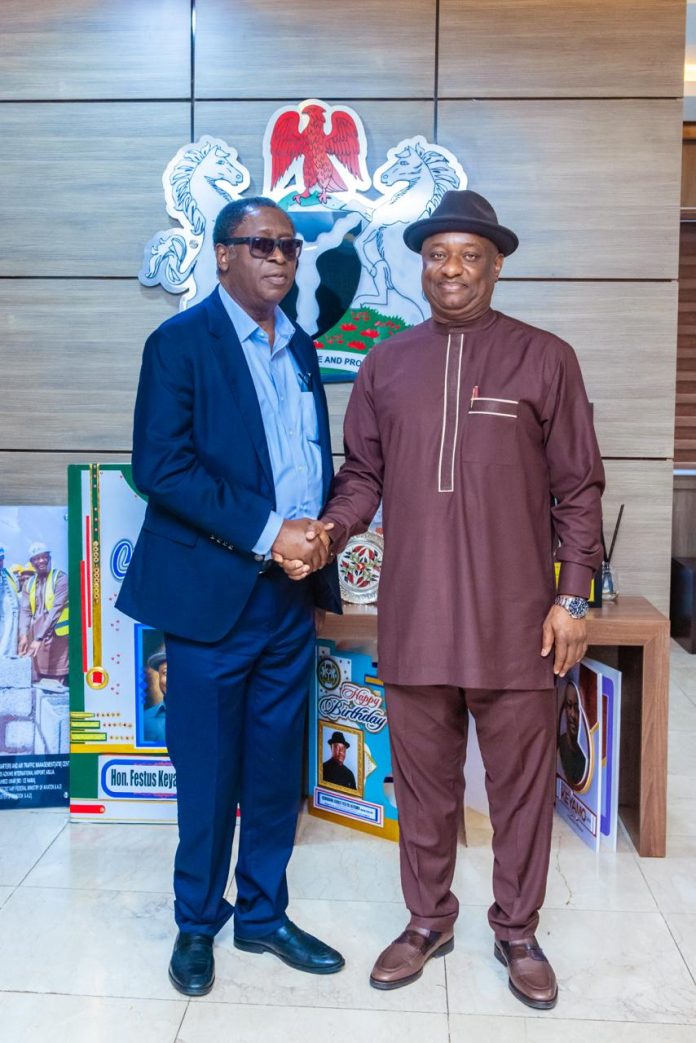
Minister of Aviation and Aerospace Development, Mr. Festus Keyamo, (right) in a handshake with Chairman of The Bi-Courtney Aviation Services Limited (BASL) Dr. Olawale Babalakin, at the signing of the final concession agreement between the Federal Government and BASL, operators of the MMA2 at the Minister’s office in Abuja.
Tuesday, 20 October 2026 will remain indelible in the annals of Nigerian aviation. The day witnessed the signing of the resolution of the hitherto protracted dispute between the Federal Government and Bi-Courtney Aviation Services Limited (BASL) over the Murtala Mohammed Airport Terminal Two (MMA2) in Lagos by the Minister of Aviation and Aerospace Development, Mr. Festus Keyamo on behalf of the federal government and the Chairman of Bi-Courtney Aviation Services Limited (BASL), managers of the MMA2, Dr. Wale Babalakin in the Minister’s office in Abuja.
The treaty has raised fresh hopes for infrastructure development, improved revenue generation, regional connectivity and renewed investor confidence in Nigeria’s aviation industry.
The settlement, which ends more than 18 years of disagreement, multiple rounds of litigation and media scrutiny provides an opportunity for the government and the private concessionaire to redirect their energies towards developing airport infrastructure, expanding commercial activities and creating employment opportunities.
The deal was formalised through an agreement involving the Federal Government, the Federal Airports Authority of Nigeria (FAAN), Bi-Courtney Limited and Stabilini Visinoni Limited, whilst the resolution is expected to restore a more stable commercial relationship between the parties and unlock the potential of facilities that have remained affected by the dispute.
Keyamo, who announced the development at the signing ceremony, described the settlement as a major achievement of President Bola Tinubu’s administration, noting that sustained negotiations had succeeded where years of litigation had failed.
According to the minister, the Federal Executive Council approved the framework for the negotiated settlement on April 30, 2026, paving the way for the parties to resolve their outstanding claims and establish clearer contractual obligations.
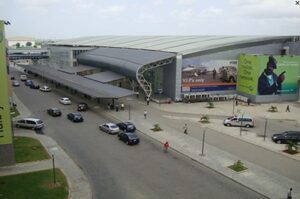
MMA2 airport terminal, Lagos
For Nigeria’s aviation industry, the significance of the agreement extends beyond the closure of a longstanding legal dispute. It offers a chance to improve airport infrastructure, strengthen public-private partnerships, attract investment and maximise the economic benefits of the country’s signature of private investment in aviation and also Lagos’s important domestic aviation facilities.
It is good the feud has finally come to an end because the benefits are enormous.
Restoring revenue and strengthening public-private partnerships
One of the immediate outcomes of the settlement is the resumption of concession fee payments by Bi-Courtney to FAAN under the original agreement.
Keyamo affirmed that FAAN had not earned revenue from MMA2 for nearly two decades because of the disagreements between the parties. He said “FAAN had not earned a kobo from MMA2 for the last 20 years because of disputes. Today, FAAN begins to earn its money from this settlement.”
The resumption of payments is important to the government’s efforts to improve revenue generation from aviation infrastructure and ensure that concession arrangements deliver the financial benefits envisaged in contractual terms.
Also, FAAN as the agency responsible for managing federal airports, requires sustainable revenue streams to support airport operations, maintenance and infrastructure improvements. A more predictable flow of concession payments could strengthen its financial position and improve the commercial relationship between the authority and private operators.
The agreement also provides for the reciprocal waiver of outstanding financial and other claims by the parties, allowing them to move forward without the burden of the unresolved claims that had fuelled years of litigation.
This approach highlights the potential value of constructive engagement in resolving disagreements between the government and private investors, particularly in capital-intensive sectors such as aviation, where uncertainty can delay projects and undermine investment returns.
However, the long-term benefits will depend on the parties’ willingness to comply with the settlement and sustain a transparent, mutually accountable relationship.
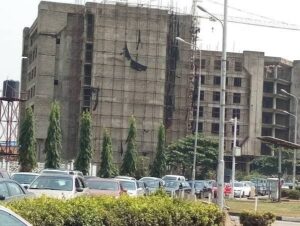
The hitherto abandoned hotel
Unlocking abandoned infrastructure
Perhaps the most visible benefit of the agreement is the prospect of completing the abandoned four-star hotel and conference centre near MMA2.
The unfinished structures have remained an eyesore in the airport environment for years as Keyamo also noted, reflecting the consequences of a dispute that prevented the projects from reaching completion.
It is noteworthy that Keyamo urged Bi-Courtney to fulfil its obligations by completing the facilities, stressing that the public would expect the settlement to produce tangible improvements.
The good thing is that the hotel and conference centre have the potential to strengthen the airport’s commercial appeal by providing accommodation, meeting spaces and conference facilities for business travellers, corporate organisations, airline operators and other airport users.
For Lagos, Nigeria’s principal commercial centre, the development will no doubt support business tourism, corporate events and other activities that generate demand for hospitality, transportation, catering and related services around the airport.
The construction and subsequent operation of the facilities could also create employment across several sectors, including civil engineering, construction, electrical installations, hospitality, facility management, security and customer service.
Beyond direct employment, the projects will stimulate economic activity among local suppliers, contractors and service providers, allowing the benefits of airport development to extend beyond the terminal itself.
Again the settlement addresses the hotel and conference centre through restored rights and separate lease agreements specifying the obligations attached to each facility.
These arrangements should provide a clearer basis for completing the projects and reducing the likelihood of fresh disagreements over ownership, construction responsibilities and commercial rights.
Nevertheless, the expected benefits will only materialise when the structures are completed, equipped and made operational. The government, the media and relevant stakeholders must therefore monitor implementation to ensure that the commitments made at the signing ceremony translate into finished infrastructure.

Inside view of the MMA2
Expanding regional air connectivity
Another important provision of the agreement is the opportunity for MMA2 to accommodate regional flight operations within Africa. As the minister said the Federal Government had agreed to allow Bi-Courtney to expand the terminal’s apron to accommodate regional flights, subject to the facility’s full capacity.
The planned expansion could create additional opportunities for airlines and aviation service providers while strengthening Lagos’s position as a gateway for travel and commerce across the African continent.
Improved regional connectivity can support business travel, tourism, trade and the movement of people between Nigeria and other African countries. It can also generate demand for ground handling, aircraft servicing, passenger processing, retail, transport and other airport-related services.
For airlines, access to additional capacity and improved facilities can create opportunities to develop routes and serve markets more efficiently, provided passenger demand, regulatory requirements and operational conditions support the expansion.
For Bi-Courtney, the opportunity could improve the commercial prospects of MMA2 by broadening its operational activities and increasing the range of services available to passengers.
However, the planned regional operations will require appropriate infrastructure, regulatory clearances, effective coordination with relevant aviation authorities and strict adherence to safety standards. The terminal’s capacity must also be managed carefully to ensure that additional flights do not compromise passenger experience or operational efficiency.
If successfully implemented, the expansion could contribute to the wider development of Nigeria’s aviation industry by encouraging greater connectivity and creating opportunities for commercial growth.
 The General Aviation Terminal (GAT) in Lagos
Clarifying rights and responsibilities
One area of importance that was captured in the treaty was the resolution of the outstanding issues concerning the General Aviation Terminal (GAT), popularly known as the old domestic terminal.
Keyamo clarified that the facility remains the property of the Federal Government and is operated by FAAN, and added that Bi-Courtney had relinquished its exclusive rights under the original concession agreement.
The clarification is significant because disagreements over ownership, concession benefits and operational responsibilities can create uncertainty in the management of airport infrastructure.
By establishing clear boundaries between public ownership, operational control and private commercial interests, the agreement offers a framework for improved coordination among the parties.
It also reinforces the government’s responsibility to safeguard public assets while providing private investors with sufficient certainty to undertake long-term commercial commitments.
The minister further stated that the government and relevant regulatory authorities would retain oversight of security, emergency response, airport operations and maintenance standards.
Such oversight will remain essential as the parties pursue expanded operations and the completion of the outstanding projects. Commercial development must go hand in hand with aviation safety, security, regulatory compliance and the maintenance of appropriate service standards.
In all the settlement therefore presents an opportunity to demonstrate that public-private partnerships can deliver infrastructure and commercial benefits when contractual responsibilities are clearly defined and consistently enforced.

The deal signing ceremony in Abuja
A new signal to investors
For the wider aviation industry, one of the most important implications of the agreement is its potential to strengthen investor confidence.
For the benefit of hindsight, the original concession agreement was signed on April 24, 2003, by the Federal Government, Bi-Courtney and Stabilini Visinoni Limited for the design, construction, operation and eventual transfer of MMA2.
The project was conceived to replace a domestic terminal damaged by fire in 2000 and provide improved facilities for Nigeria’s growing aviation market. The concession initially provided for a 12-year term beginning on May 7, 2007, but was subsequently extended to 36 years.
Disagreements later emerged over financial claims, concession benefits and ownership of airport assets, resulting in multiple court cases, some of which reached the Supreme Court.
However a separate dispute followed FAAN’s termination of the leases for the hotel and conference centre on April 19, 2012, over alleged failure to fulfil construction obligations. Bi-Courtney challenged the termination in court.
The prolonged disagreement illustrated the risks associated with unresolved contractual disputes in infrastructure projects that require substantial capital, long investment horizons and close cooperation between government and private enterprises.
Good that the Minister said he initiated negotiations with Bi-Courtney chairman, Dr Wale Babalakin, both of them Senior Advocate of Nigeria (SAN) after assuming office with both parties subsequently bringing in their legal, commercial and technical teams into the discussions.
The negotiations were driven by the recognition that the national interest was more important than continued disagreement with Keyamo affirming that “What years of litigation could not deliver, constructive engagement has now made possible.”
The resolution sends a message that difficult disputes between government and private investors can be addressed through dialogue and compromise without abandoning the need for accountability.
For prospective investors in airport terminals, cargo facilities, aviation services and other transport infrastructure, a predictable contractual environment is essential to making investment decisions. Investors need confidence that agreements will be respected, disputes handled fairly and responsibilities enforced.
Babalakin did acknowledge the consideration as he observed that prolonged uncertainty can discourage long-term investment, but affirmed that the agreement would demonstrate that sustained engagement can resolve disputes and create a more favourable environment for private-sector participation.
However, while the settlement is a positive step, investor confidence will ultimately depend on its implementation and on whether similar contractual disagreements can be managed more efficiently in the future.

President Bola Tinubu in a handshake with Mr. Festus Keyamo
Tinubu, Keyamo, Kuku deserves the kudos
On his part, Babalakin commended President Tinubu for facilitating the resolution through the intervention of the Minister of Aviation and Aerospace Development.
While describing the settlement as a victory for the country, he said its benefits should extend beyond the interests of the parties directly involved “This is not a win for us alone; it is a win for Nigerians,” he noted.
He also expressed appreciation to the President, the minister and Nigerians who had followed the dispute over the years, noting that the agreement provides an opportunity for renewed cooperation and infrastructure delivery.
He also pledged that Bi-Courtney would honour its commitments under the settlement and work constructively with the government, FAAN and other stakeholders.
Giving his assurances, the BASL Chairman said “We will not disappoint the President, the Ministry of Aviation and Aerospace Development, FAAN or Nigerians.”
As the initiator and driver of the project, Keyamo also commended President Bola Ahmed Tinubu for his leadership and role in facilitating the resolution, as well as the Federal Executive Council for approving the settlement framework.
He did acknowledge the contributions of FAAN’s Managing Director, Mrs Olubunmi Kuku who no doubt had worked mostly behind the scene to ensure the whole drama surrounding the impasse is resolved and pave way for her infrastructure development initiative in the sector.
Dr. Wale Babalakin’s pledge is exemplary and thus places responsibility on the company to demonstrate that the resolution will result in completed projects, expanded commercial opportunities and the jobs anticipated from the development.
For the government, the responsibility is to provide effective oversight, ensure compliance with the agreement and protect the public interest throughout implementation.
President Bola Tinubu and FAAN MD, Mrs. Kuku
Employment and wider economic benefits
Babalakin did describe the prospect of creating well-paying jobs for Nigerians as one of the expected benefits of the agreement.
However, the scale of employment creation will depend on the level of investment, the pace of project completion and the eventual demand for the facilities and services.
Therefore it is not yet uhuru as the government and Bi-Courtney will need to ensure that employment promises are supported by measurable progress, including construction, operational readiness and opportunities for local participation.
The challenge of implementation
The aviation industry is full of optimism over the agreement, the signing ceremony marks the beginning of a new phase rather than the end of the work required to realise MMA2’s full potential.
FAAN must receive the concession fees due under the agreement, while Bi-Courtney must meet its obligations concerning the terminal, hotel, conference centre and other agreed commercial arrangements.
The planned apron expansion and regional flight operations will also require the necessary infrastructure, regulatory coordination and operational planning.
Equally important is the need to prevent fresh disputes from emerging over the interpretation or implementation of the settlement. Clear communication, effective monitoring and timely resolution of any new disagreements will be necessary to sustain the progress achieved.
Just as Mr. Keyamo emphasised, both FAAN and Bi-Courtney must fulfil their respective obligations and must be aware that the public will hold them accountable for delivering the expected improvements.
That commitment to accountability should guide the next stage of the process. The government must ensure that the settlement produces verifiable results rather than allowing the agreement to become another unfulfilled infrastructure promise.
A turning point for aviation development
Ultimately, the truce between the Federal Government and Bi- Courtney represents an important opportunity for Nigeria’s aviation industry to move beyond a prolonged dispute and concentrate effort on infrastructure development, commercial expansion and improved service delivery for the industry.
The agreement also offers a useful lesson in the management of public-private partnerships: when disagreements threaten to undermine major infrastructure projects, sustained dialogue and clearly defined obligations can provide a path towards resolution.
For the Tinubu administration, the challenge is to ensure that the settlement delivers the benefits anticipated from the intervention. For Bi-Courtney, it is an opportunity to demonstrate its commitment to completing outstanding projects and developing MMA2’s commercial potential. For FAAN, it is a chance to restore revenue flows and strengthen the management of public aviation assets.
Ultimately, the success of the agreement will not be measured by the number of years the parties spent in dispute or by the ceremony that marked its resolution. It will be measured by the completion of infrastructure, the return of concession revenue, the expansion of regional connectivity, the creation of quality jobs and the confidence it restores in Nigeria’s aviation investment environment.
If the parties translate their commitments into concrete action, the settlement could become a significant milestone in the development of Nigeria’s aviation industry and a model for resolving similar disputes that affect critical national infrastructure.