

35th ACI Conference, Kuku’s Leadership Example and the Future of Nigeria Airport Development

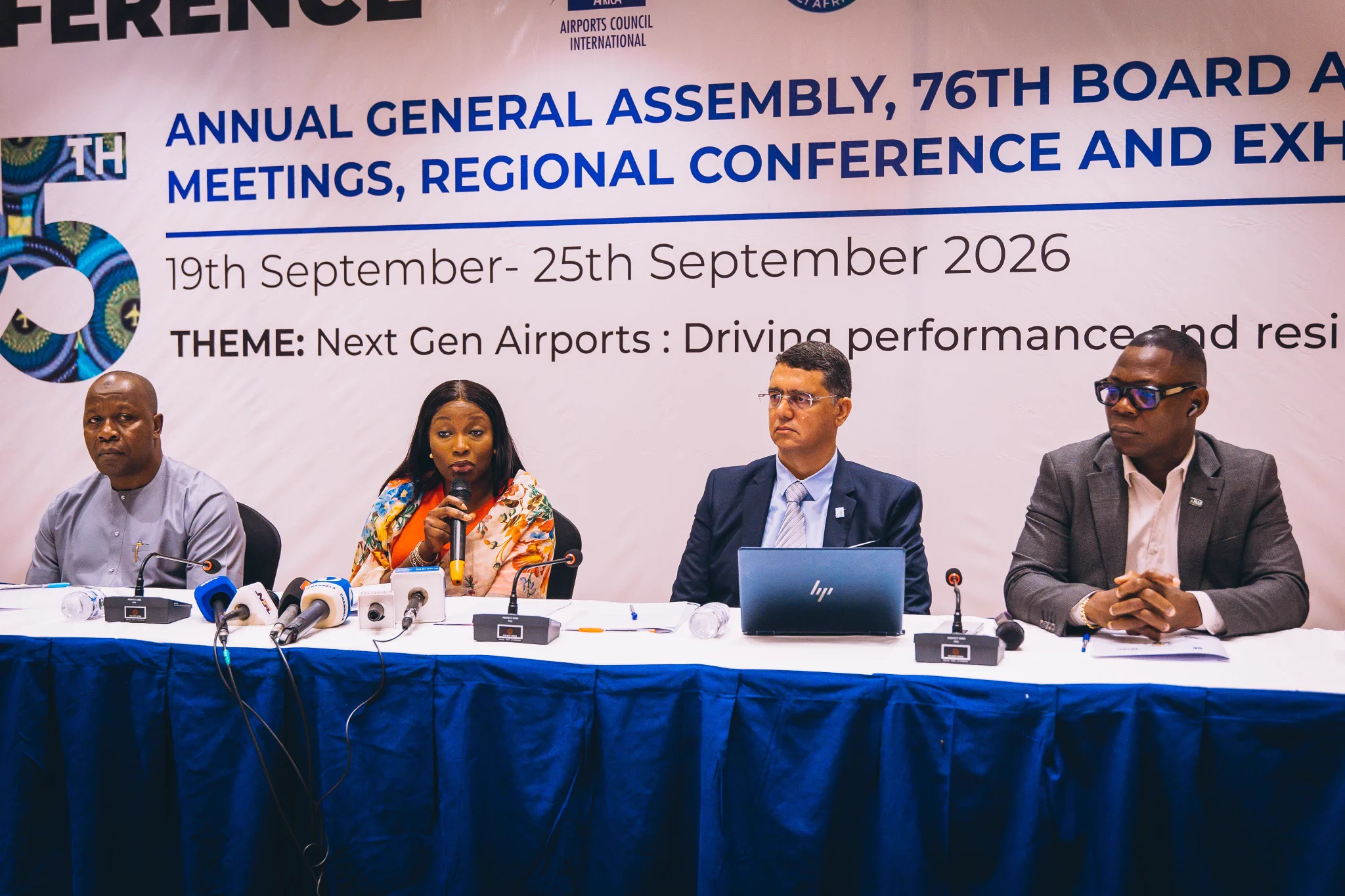
How FAAN’s transformation agenda is redefining the conversation around infrastructure, efficiency and passenger experience
Today, the Minister of Aviation and Aerospace Development, Mr. Festus Keyamo (SAN) will officially declare the 35th Airports Council International (ACI) Africa Annual General Assembly, Board and Committees Meetings, Regional Conference and Exhibition open.
As more than 500 airport professionals, policymakers, aviation experts, technology providers, exhibitors and other stakeholders from across Africa converge on Abuja for the weeklong event, it significance goes beyond Nigeria’s hosting of another international aviation gathering. It is, in many respects, a moment for the continent to examine where its airports are coming from, where they are today and, more importantly, where they must go in the years ahead. For Nigeria, the conversation has an additional dimension.
It provides an opportunity to examine the transformation taking place across the country’s airports under the leadership of the Managing Director of the Federal Airports Authority of Nigeria (FAAN), Mrs. Olubunmi Kuku, and to consider whether the emerging approach can provide a sustainable template for the future development of Nigerian airports.
The theme of the conference, “Next-Gen Airports: Driving Performance and Resilience,” is particularly relevant. It speaks directly to a changing airport environment in which success is no longer determined simply by the construction of impressive terminals or the rehabilitation of runways. The next generation of airports must be financially sustainable, operationally efficient, technologically enabled, environmentally conscious, resilient to disruptions and, above all, capable of providing passengers with safe and seamless experiences.
It is against this background that Kuku’s leadership at FAAN has attracted attention. Her tenure has coincided with an important phase of infrastructure renewal and operational transformation across Nigeria’s airports, but the more interesting aspect of her approach is the apparent attempt to connect infrastructure development with safety, passenger experience, technology, commercial efficiency and institutional performance. That broader approach mirrors the central message emerging from the ACI Africa conference.

Secretary-General of ACI Africa, Mr. Ali Tounsi and FAAN MD Mrs. Kuku
The ACI Africa warning
At a press conference in Abuja to herald the conference, Secretary-General of ACI Africa, Mr. Ali Tounsi, provided a sobering assessment of the challenges confronting airports across the continent. According to him, African airports are facing two major challenges: financial viability and a rapidly changing operating environment.
While some of the continent’s major airports are financially efficient, Tounsi said about 80 per cent of African airports are not financially efficient. That is a significant warning for airport managers and governments across Africa. Airports are expensive infrastructure assets. They require continuous investment not only in construction but also in maintenance, technology, safety, security, personnel and customer service. An airport can therefore possess a modern terminal and still struggle to remain sustainable if its revenue base is weak or its operating model is inefficient.
Tounsi also identified digitalisation, natural catastrophes, accidents, changing environmental conditions, skills and people among the issues airports must prepare to address. His central message was that the future of African airports cannot be reduced to infrastructure or money. “It’s not about infrastructure only. It’s not about money only. It’s about everything – digitalisation, preparation, environment, skills, people, the future, everything,” he said. That philosophy provides an interesting lens through which to examine the FAAN experience under Kuku.
Kuku and the transformation conversation
For Kuku, the ACI Africa conference represents an opportunity to showcase Nigeria’s airport transformation journey before an international audience. She has pointed to infrastructure development, airfield lighting, runway rehabilitation and other safety facilities as areas where improvements have been recorded. But her comments also reflect an understanding that airport transformation is a continuing journey rather than a destination.
Kuku acknowledged that Nigeria still has areas where it needs to improve, observing that the country is “still sort of playing catch-up” with developments in some other aviation markets. That admission is significant. Leadership in a complex public-sector organisation is not simply about presenting achievements. It also requires recognising institutional gaps and positioning the organisation to address them.
The 35th ACI Africa conference gives Nigeria an opportunity to do precisely that: showcase its progress while learning from airports and airport managers confronting similar challenges elsewhere.
For the FAAN MD, hers has been a leadership model built around transformation. Kuku’s leadership example at FAAN can be viewed through the broader transformation taking place within the authority. The emphasis on airport infrastructure is perhaps the most visible component. Runways and taxiways, terminal facilities, airfield lighting and other critical infrastructure constitute the physical foundation upon which airport operations depend.

FAAN MD Mrs. Kuku
The passenger at the centre
One of the most important aspects of the next-generation airport debate is passenger experience. Kuku has repeatedly linked airport transformation with improving the experience of passengers. That is important because the travelling public does not experience an airport through the language of engineering. Passengers experience airports through queues, security screening, check-in, baggage collection, cleanliness, signage, terminal comfort, customer service and transportation. For the passenger, the quality of an airport is ultimately determined by how smoothly the journey unfolds.
This means that Nigeria’s airport transformation must move beyond the traditional emphasis on physical infrastructure. A modern terminal building is important, but so are efficient processes within that terminal. Technology therefore becomes critical.
Digital passenger processing, modern security systems, real-time information, automated systems, improved baggage management and other technologies can help reduce congestion and make airport operations more predictable. The presence of about 40 exhibitors at the ACI Africa conference offers Nigeria’s airport managers an opportunity to examine precisely these kinds of solutions.
From infrastructure to performance
The conference theme also aligned the fundamental message and the vision Mrs. Kuku is driving at FAAN: How can Nigeria ensure that its infrastructure investments translate into measurable improvements in airport performance?
This is where her management philosophy has becomes as important as the construction going on at airports across the country. Her position has been a newly rehabilitated runway must be properly maintained, a modern terminal must be efficiently operated, new technology must be integrated into existing systems, staff must be trained to operate new equipment, passengers must actually experience improved service and that the airport must generate sufficient revenue to sustain the investment.
The above has become an integrated management philosophy in the last three years. Kuku’s emphasis on showcasing the “landmark achievements” recorded by Nigeria is therefore a significant part of the story. However, the more important question is how these achievements can be sustained.
The financial sustainability challenge
Tounsi’s observation at the conference about the financial condition of African airports brings another issue into sharp focus: airport financing. Nigeria’s airport system requires enormous resources. Beyond government funding, airport authorities need sustainable commercial and operational revenue streams capable of supporting maintenance and future investment.
It is it is worthy to note that FAAN’s airports have developed considerable commercial potential in three years. Retail, advertising, parking, hospitality, cargo, logistics, concessions and other non-aeronautical activities that can provide important supplementary revenues. A commercially stronger airport is better positioned to maintain its infrastructure, invest in technology and improve passenger services.
But there is also a delicate balance. Airport charges must not become so burdensome that they undermine airline operations and passenger affordability. Conversely, airports cannot remain dependent on inadequate revenue while infrastructure deteriorates. The challenge for airport leadership is therefore to develop a sustainable commercial model that supports investment without undermining the competitiveness of airlines and the affordability of air travel.
Lagos and Abuja: the ultimate test
The future of Nigeria’s airport development will be judged substantially by what happens at its two major international gateways—Murtala Muhammed International Airport, Lagos, and Nnamdi Azikiwe International Airport, Abuja. Speaking at the conference, Kuku specifically highlighted the significance of the two airports, noting that they are among the busiest airports in the region.
Their strategic importance cannot be overstated, Lagos is Nigeria’s principal commercial and economic gateway while Abuja is the nation’s political and diplomatic gateway. The quality of both airports therefore influences how Nigeria is perceived by international visitors, investors, businesses and airlines.
Their competitiveness will depend on more than terminal buildings, airlines need operational reliability, passengers need efficient processing, businesses need dependable cargo and logistics services, international travellers need predictable ground transportation and the airport operator needs sufficient revenue to continuously maintain and upgrade infrastructure. The future competitiveness of Lagos and Abuja must therefore be considered as part of Nigeria’s broader economic development strategy.
Kuku’s leadership and the next chapter
The real test of Kuku’s leadership at FAAN will ultimately not be how many projects are commissioned during her tenure. It will be whether the institution is left with stronger systems, better-maintained infrastructure, improved operational processes, enhanced passenger experience and a more sustainable approach to airport management. That is the difference between project administration and institutional transformation.
The 35th ACI Africa conference provides a useful platform for examining that distinction. The conference is bringing together airport operators from across Africa at a time when the continent is confronting fundamental questions about airport financing, technology, resilience, sustainability and passenger experience. Nigeria is not exempt from these challenges. Indeed, as one of Africa’s largest aviation markets, the country has much at stake.

Beyond the conference
FAAN Director of Public Affairs and Consumer Protection and Chairman of the Local Organising Committee, Henry Agbebire, has urged the media to look beyond the ceremonies and personalities to the substantive issues affecting African airports. That call is worth heeding.
The true legacy of the Abuja conference should not be measured simply by the number of delegates who attend, exhibitors who participate or dignitaries who speak. Its value will ultimately depend on whether it produces ideas and partnerships that can be translated into better airports. For Nigeria, the conference should provide an opportunity to benchmark its progress, identify gaps and examine what other airport operators are doing differently.
For FAAN, it offers an opportunity to demonstrate the progress of its transformation programme while also learning from the wider African airport community, and for Kuku, it provides an international platform on which the management philosophy being pursued at FAAN can be examined against the emerging definition of the next-generation airport.
The airport of tomorrow
The airport of tomorrow will not simply be bigger, it will be smarter, it will not simply have more infrastructure, it will use that infrastructure more efficiently, it will not simply process more passengers, it will provide a better experience for those passengers, and it will not simply depend on government funding, it will develop sustainable commercial models capable of supporting continuous investment.
That is the challenge Nigeria now faces. The country has embarked on an important phase of airport infrastructure renewal. The next step is to ensure that those investments become the foundation for sustainable airport development. For FAAN, that means linking infrastructure with financial sustainability, technology, safety, human capacity and passenger experience.
And for Kuku’s leadership, the lasting measure will be whether today’s transformation efforts create an institutional platform capable of carrying Nigerian airports into the next generation. The 35th ACI Africa conference, therefore, is not merely about Next-Gen Airports. It is about whether African airports are prepared for the future. For Nigeria, and particularly for FAAN, that future is already here.