

Why National Single Window might hit brick walls, SCAN warns

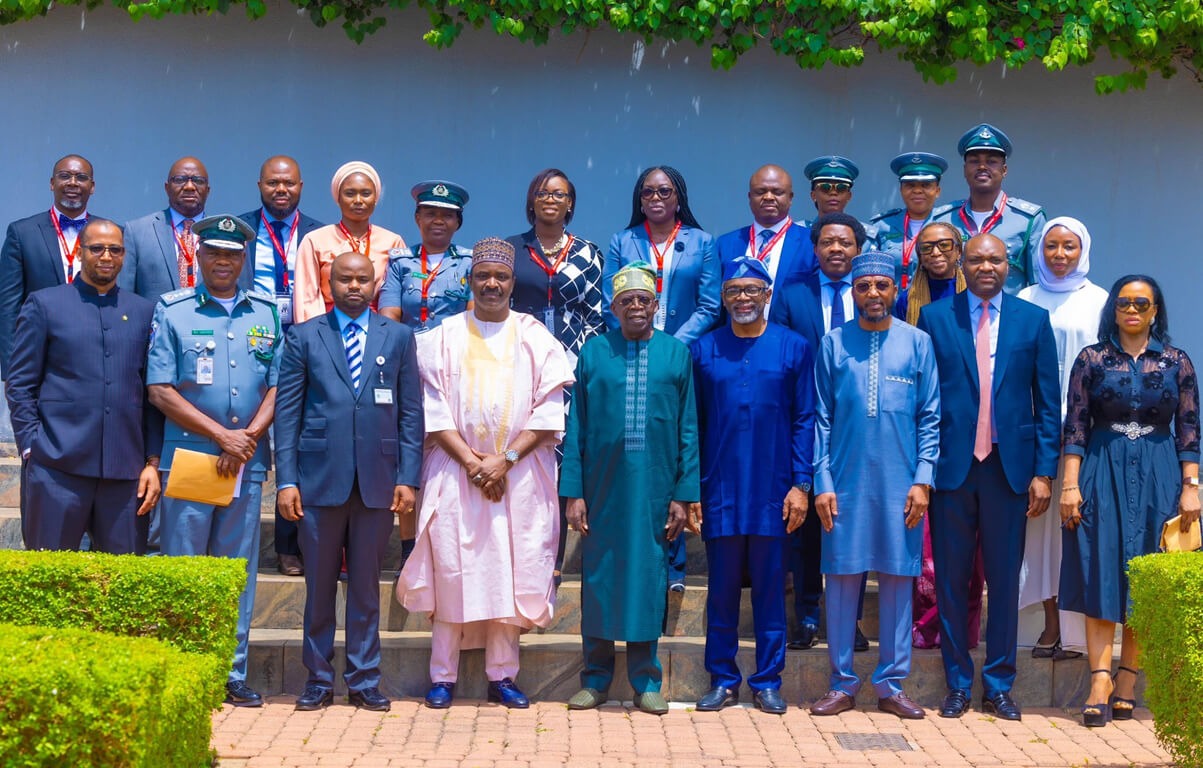
President Bola Ahmed Tinubu (5th from Left, front roll) in a group photograph with members during the Presidential Inauguration of the National Single Window Project SteerCo on April 16, 2024 at the Presidential Villa, Abuja
Ahead of the much-anticipated rollout of the National Single Window (NSW) on March 27, 2026, the foremost umbrella body of maritime journalists, Shipping Correspondents Association of Nigeria (SCAN) has called on the Federal Government and relevant stakeholders to ensure all necessary structures are in place for Nigerians to fully benefit from the initiative.
It said while the National Single Window represents a major step toward modernising Nigeria’s trade processes, improving transparency and enhancing operational efficiency at the nation’s ports, its implementation must be carefully structured to avoid disruptions.
SCAN President, Moses Ebosele told journalists in Lagos at the weekend that the initiative has the potential to simplify documentation processes, reduce cargo clearance time, and strengthen coordination among government agencies involved in international trade.
President Bola Tinubu had on April 16, 2024 launched the National Single Window initiative, a transformative project that will propel the nation’s economy to new heights.
Speaking at the launch of the initiative at the State House, the President said the National Single Window is a game-changer that will revolutionize the way trade is conducted in the country, and with the Office of the President overseeing the steering committee that will drive the reform process forward.
Outlining the benefits of the initiative, he said by simplifying government trade compliance through a digital platform, Nigeria will unlock the doors to economic prosperity, adding: “This initiative will link our ports, government agencies, and key stakeholders, creating a seamless and efficient system that will facilitate trade like never before.”
However, the SCAN President noted that the success of such a transformative platform depends largely on adequate preparation, strong institutional coordination and proper integration of stakeholders.
“The introduction of the National Single Window is a welcome development and a major reform capable of improving Nigeria’s trade competitiveness. However, it is important that the NSW Secretariat ensures that all operational, technical and institutional frameworks are properly established before the official rollout,” he said.
He stressed that port users, freight forwarders, shipping companies, terminal operators and regulatory agencies must be adequately prepared and properly integrated into the system to prevent confusion, delays or disruptions in cargo clearance processes once the platform goes live.
The SCAN President also urged the National Single Window Secretariat to intensify engagement with industry stakeholders and ensure that adequate testing, training and system integration are completed ahead of the launch date.
“A reform of this magnitude requires robust infrastructure, seamless inter-agency connectivity and adequate sensitisation of stakeholders. Rushing the rollout without ensuring that all components of the system are fully operational could create avoidable challenges for port users and the wider trading community,” he added.
Ebosele emphasised that the maritime industry remains a critical pillar of Nigeria’s economy, noting that any reform affecting port operations must be implemented in a manner that guarantees efficiency, stability and ease of doing business.
He therefore urged the Federal Government and key agencies within the maritime and trade ecosystem to work closely with the NSW Secretariat to ensure a smooth, transparent and successful implementation of the initiative.
The SCAN President also called on the Federal Government to deploy more personnel, especially industry stakeholders to the NSW Secretariat as part of measures to ensure a smooth take-off of the platform on March 27, 2026.
He further urged the government to roll out broader and more robust stakeholder engagement, noting that the current level of consultation remains insufficient for a strategic project of such national importance.
Ebosele reaffirmed SCAN’s commitment to supporting initiatives that promote transparency, trade facilitation and sustainable growth within Nigeria’s maritime sector and the broader economy.